Summer in the Water Meadows
It was a busy summer for Bury Water Meadows Group (BWMG). During the period from June to August, as temperatures rose, and the levels of the River Lark and River Linnet fell, we carried out 11 work parties.
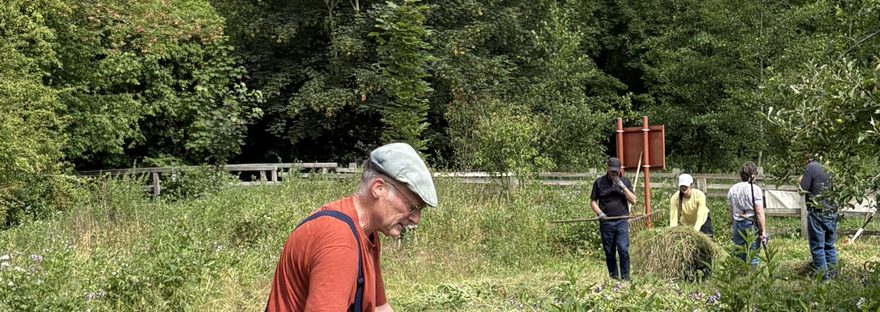
The work parties embraced scything and raking (a summer staple), chip spreading and tackling the invasive species Himalayan Balsam, and covered all our areas of responsibility from Ram Meadow in the north through to No Man’s Meadows in the south. The volunteers involved contributed a total of 245 hours of their time to these tasks. It was good to welcome several new volunteers to join us. Some of them had visited our Wildlife Festival in May, whilst others had seen us at work as they walked through the meadows or been inspired by our hard-working litter picking group in town.
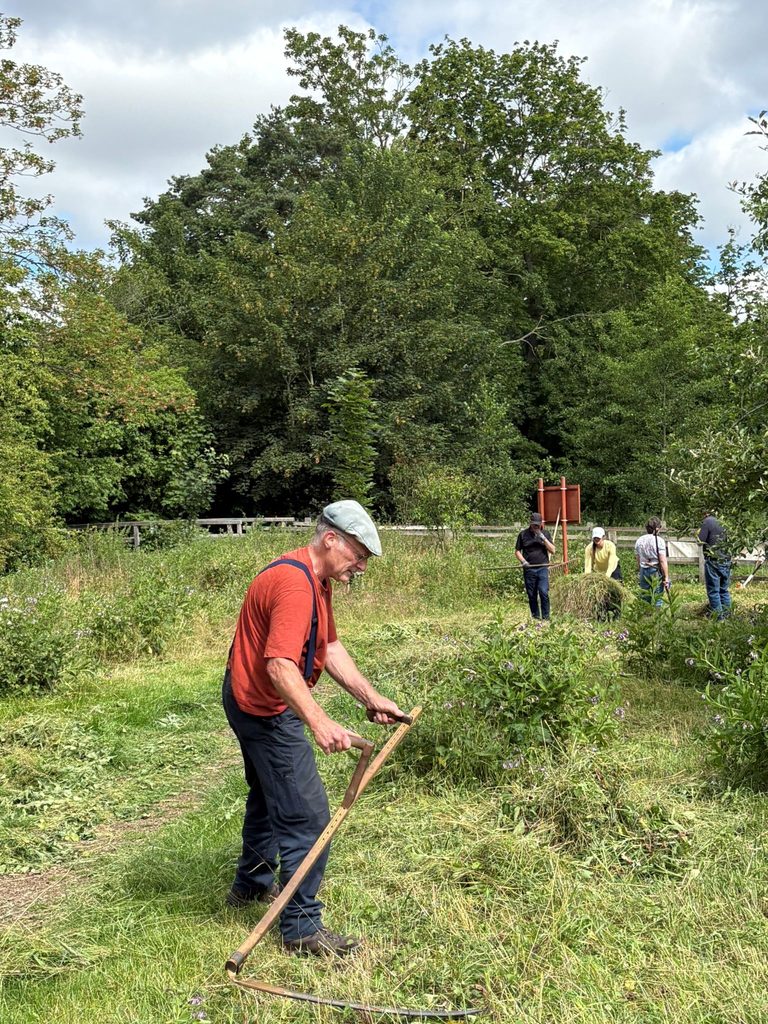
A particular focus of summer scything and raking is the meadow in Crankles South. By dint of several years of cutting the nettles previously dominant in this location have surrendered their hegemony to wildflowers. It was here in late July that a couple of BWMG’s trustees met with the Anglia in Bloom judges at the final stop of their tour of the town. We showed them our water vole habitat and the wildflower meadow. Sadly, the drought meant that the area was not looking its best, but we had a portfolio of photographs to show the judges so that they could see what the meadow looks like in all its floral glory! We were delighted to hear later in the year that Bury St Edmunds had been awarded a Large Town Gold award and the accolade of Best Large Town in East Anglia. From our point of view, it was gratifying to hear the judges praising ‘the outstanding biodiversity work undertaken by Bury Water Meadows Group’ and to feel that we had played a small part in the town’s success.
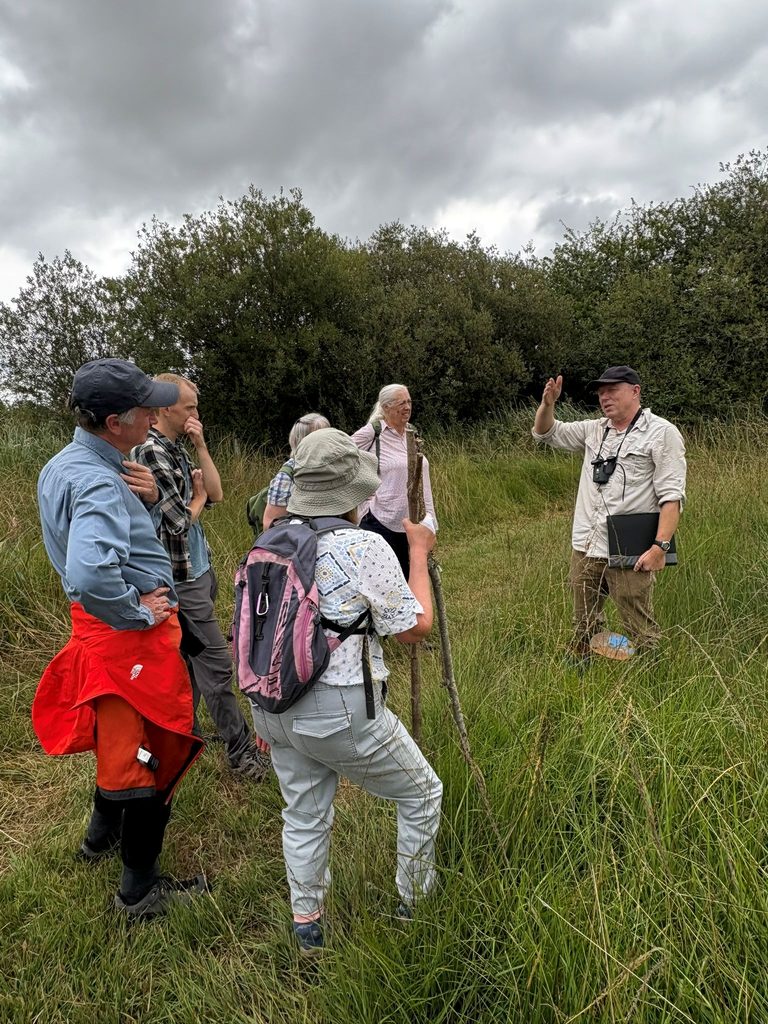
In August the BWMG trustees had an outing to Natural England’s reserve at Chippenham Fen where we were warmly welcomed by the knowledgeable Senior Reserve manager. He gave us a presentation on the work that has been carried out to raise the water table levels at the Fen to preserve the underlying peat. This work is important as peat is a significant store of carbon. It also has implications for the wider River Lark area as the river’s floodplains are estimated to contain a substantial mass of buried carbon stored in this way. Amid heat and drought our visit was a salutary reminder of the critical importance of such carbon stores in our efforts to address the climate emergency.