Fungi in the spotlight
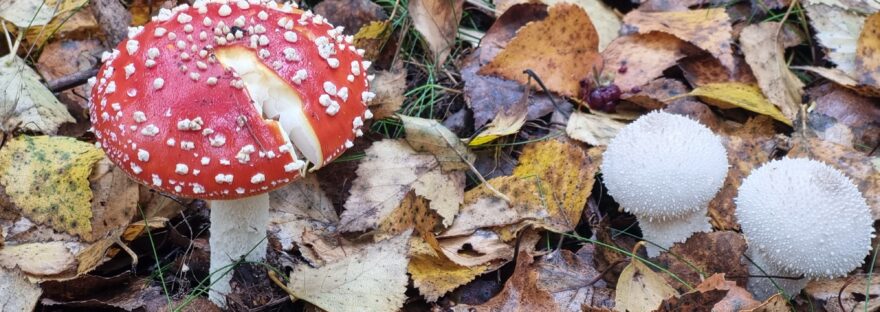
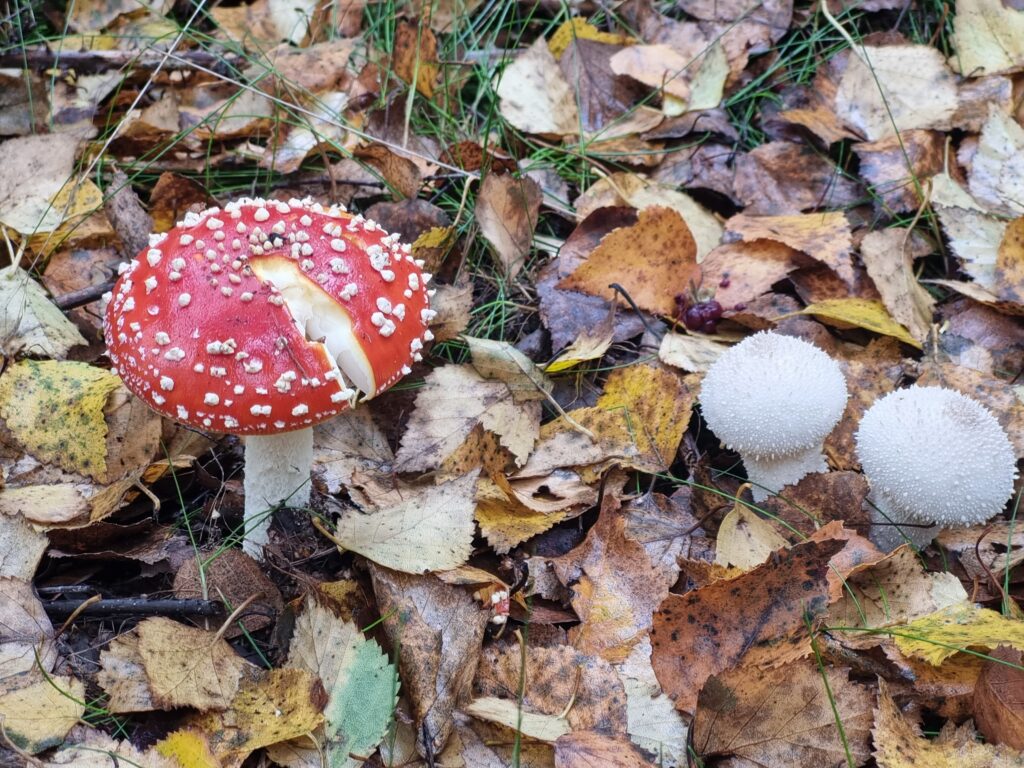
As we go into autumn, step into the remarkable word of fungi. There is something magical about stumbling across a red and white capped toadstool in Thetford Forest and imagining an elf or goblin jumping off its perch and scuttling away! Often overlooked and misunderstood, fungi are as much a part of our natural heritage as the oak tree or the kingfisher and can be a whole lot stranger and more fascinating! For a start, life on earth wouldn’t exist without the recycling activities of fungi. They act as nature’s recyclers, decomposing dead plants, wood and even animals. In doing so, they release vital nutrients back into the soil for other organisms to use. And you can find many examples here in our meadows if you are prepared to go and look for them.
Fungi are the fourth kingdom of life, distinct from plants, animals, and bacteria. In fact they are more closely related to animals than plants because their cell walls are made of a substance akin to insect cell walls, not of cellulose. Also unlike plants, fungi do not make their own food from sunlight. Instead, they absorb nutrients from their surroundings, often breaking down dead organic matter in the process, hence the reason you will see lots of them on tree stumps and wood chips.
There are around 4000 species in Suffolk alone, varying hugely in size, shape and colour. Our bio recording team have already started logging up an impressive number in the meadows and Great Churchyard. There is no scientific difference between a mushroom and a toadstool; an edible fungus is usually referred to as a mushroom, such as Ink Caps or Chicken of the Wood ‘brackets’ which grow on trees, whereas an inedible one is a toadstool such as the iconic red capped Fly Agaric that the elves sit on. Less visible, are the moulds and yeasts which carry out similar and vital ecological tasks behind the scenes. They are fungi too.
The organisms mostly exist underground and many species can be hundreds of miles long, weaving an intricate tapestry of microscopic threads, called mycelium, all over the earth. We only notice them when their fruiting bodies erupt through the soil or dead wood in the form of mushrooms. These are their spore producing structures that emerge when conditions are right, releasing spores to spread the next generation, just like a plant releases seed for the same purpose.
Moisture is the lifeblood of fungi. So the best time to spot mushrooms is Autumn, when the combination of cooler temperatures and increased moisture in the air and soil allows mycelium to quickly produce mushrooms. Prolonged dryness, on the other hand, can halt fruiting altogether, forcing the mycelium to wait until conditions improve. Despite their pivotal ecological importance, fungi face growing pressure from development, neglect, and climate change.
This summer, we in the East experienced an extended drought, with rainfall well below the seasonal norm. Such conditions are a challenge for moisture-loving fungi. The lack of moisture has generally thought to have delayed or even prevented the appearance of mushrooms, reducing opportunities for spore dispersal and weakening the fungi’s reproductive success for the future. But our bio recorders have already clocked up an impressive 35 species so far and given a normal autumn there should be plenty of mushrooms to find with their attendant elves and goblins!
Jillian Macready
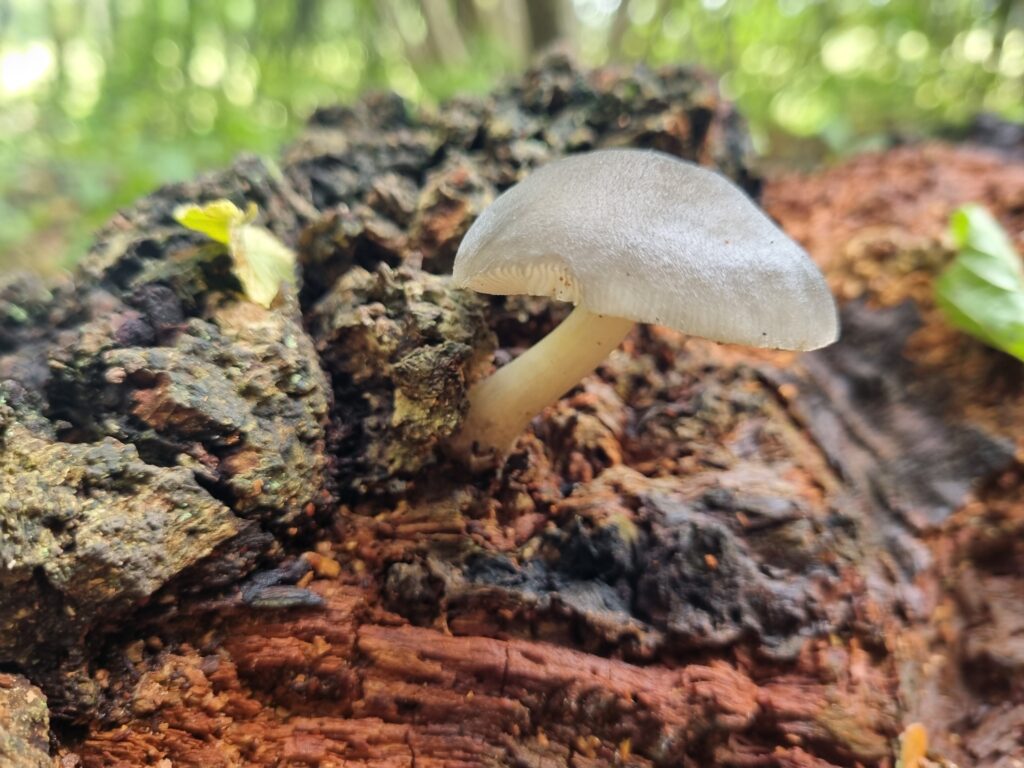
Fruiting body: Structures like mushrooms, puffballs, and brackets are the reproductive structures that grow from the mycelium. The visible mushroom is only a small part of the whole organism.
Mycelium: This is the vegetative part of a fungus, consisting of a network of hyphae (filaments). It is often hidden underground or within organic matter.
